If you've ever been to a midwestern Grange dinner, you might've enjoyed cube steak. Named for the process of cubing, this beef cut is generally from the top round. The meat is passed through a cubing machine that pierces the meat to help with tenderization.
While these cuts are generally less expensive they are tougher and require more cooking time. Although the meat is referred to as "steak", don't try grilling. Braising in a slow oven in a savory gravy, produces fork-tender, flavorful meat.
We purchase meat from our local butcher, which sells cube steak in one-pound packages (four steaks per package). If you're serving more, just double the gravy. Be sure to cook in a baking dish with a snug lid. Foil doesn't seem to work as well.
The gravy pairs well with starchy sides like mashed potatoes or rice. I like whole grain noodles along with our
freezer beans or glazed carrots.
 |
| Dredge meat in flour, salt and pepper, shaking off excess flour. |
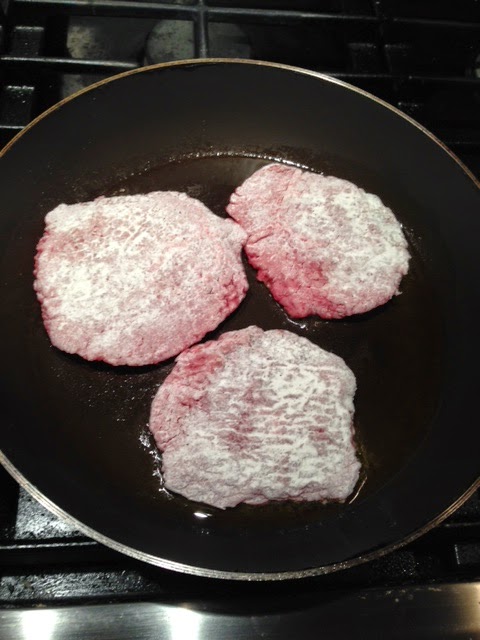 |
Sear meat over medium high heat. Don't worry
if it's not completely cooked, Remove to a plate. |
 |
In the same pan, saute vegetables and garlic.
Add broth, tomato paste, vinegar and rosemary. Bring to a boil. |
 |
Make a slurry by combining beef broth and flour, whisking until smooth.
Add slurry, a small amount at a time, to boiling broth while whisking. Allow broth
to boil before adding additional slurry. Continue to add slurry until desired thickness. |
 |
Layer meat and gravy in a greased casserole dish making sure meat is
completely submersed. Braise at 325 degrees for 2 1/2 hours. |
 |
Finished beef is fall-apart tender. Whole
grain noodles are perfect for catching gravy. |
Cube Steak in Gravy
4 cube steaks
1/2 cup flour
2 Tbsp vegetable oil
1 onion, chopped
1/4 cup celery
8 oz fresh mushrooms, sliced
1 clove garlic, finely chopped
3 cups beef broth
2 Tbsp tomato paste
1 Tbsp vinegar
1 tsp dried rosemary
Salt & pepper to taste
Slurry:
1/2 cup beef broth
1/2 cup flour
Preheat oven to 325 degrees. Brown steaks: Place 1/2 cup flour in a pie plate. Add salt and pepper. Dredge steaks in flour mixture, shaking off excess. Heat oil in large pan over medium heat. Sear meat in hot oil. Steaks do not have to be cooked completely. Remove meat to a plate.
Build sauce: In the same pan, add onion and celery cooking about 3 minutes (add more oil if necessary). Add mushrooms and cook for 2-3 more minutes. Add garlic and cook for 1 minute. Add broth, paste, vinegar and rosemary. Bring to a boil scraping up brown bits on the bottom of the pan. In a bowl, combine 1/2 cup broth and 1/2 cup flour, whisking until smooth. While broth is boiling add a small amount of slurry while continually whisking broth. Return to boiling before adding more. Continue to add slurry until sauce is desired thickness. You may not use all of it. Season gravy with salt and pepper.
Slow roast: Coat a baking or casserole dish with cooking spray. Add about 1/2 cup of sauce to the bottom of the dish. Alternate layers of meat and sauce until all the meat is submersed under sauce. Cover with lid and bake for 2 1/2 hours. Serve with mashed potatoes, rice or noodles.


